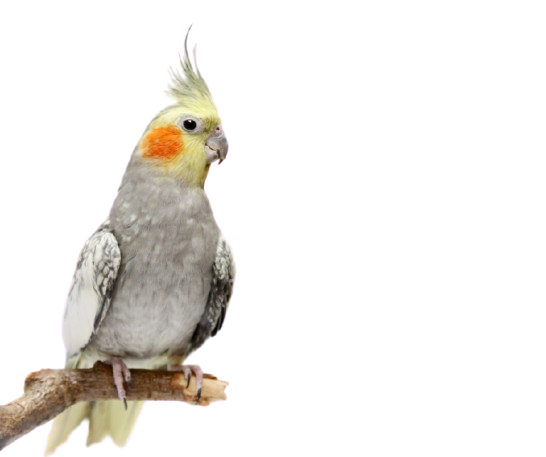
Are cockatiels affectionate with their owners
Are cockatiels affectionate with their owners?
Are cockatiels affectionate with their owners? Yes, many cockatiels become remarkably attached to the people they trust, although their idea of affection is not always the same as a dog or cat’s. A cockatiel may show affection by sitting on your shoulder, climbing onto your hand, following you around the room, whistling when you leave, or gently requesting head scratches. The key is trust. Give a cockatiel time, respect its boundaries, and affection usually develops naturally rather than being forced.
Are Cockatiels Affectionate With Their Owners?
When people ask me are cockatiels affectionate with their owners, I usually tell them to watch the small things.
A cockatiel does not always announce affection in an obvious way. Sometimes it is simply the bird choosing to sit beside you when it has other places to go. Another bird may gently lower its head because it wants a scratch around the crest and cheeks.
Those moments are easy to overlook.
Cockatiels are social parrots, and individual birds can develop strong relationships with familiar people. A bird that trusts its owner may actively seek interaction, respond to their voice, and become comfortable being handled.
But there is no universal cockatiel personality. One bird can be almost comically affectionate, while another prefers a little more personal space.
Both can be perfectly normal.
How Do Cockatiels Show Affection?
Cockatiel affection can appear in several forms.
Sitting on You
A relaxed cockatiel may choose your shoulder, hand, arm, or head as a favorite perch. This is particularly meaningful when the bird has plenty of other safe perches available but repeatedly chooses to be near you.
Some birds become little shadows around the house.
Asking for Head Scratches
A cockatiel that lowers its head toward your finger may be inviting gentle scratches around the head and neck. These areas are difficult for the bird to groom itself, so social grooming can become an enjoyable part of the relationship.
Be gentle, though. The bird should be able to move away whenever it wants.
Following You Around
A strongly bonded cockatiel may call when you leave the room or move toward you when you return. It may watch you from its play stand while you work, cook, or simply sit nearby.
This is one of those behaviors owners often find surprisingly sweet.
Responding to Your Voice
Some cockatiels learn their owner’s voice very quickly. They may whistle in response, become alert when they hear you, or develop particular sounds used specifically during interactions.
Not every bird becomes a great mimic, but communication itself can become part of the bond.
Why Some Cockatiels Are More Affectionate Than Others
Personality is probably the biggest factor.
Two cockatiels raised in similar environments can behave completely differently. One might step onto a hand within minutes, while another watches cautiously from a perch for days.
Early socialization can also influence how comfortable a bird becomes around people. A young cockatiel that has experienced calm, respectful handling may have an easier starting point, but an older bird can certainly learn to trust people too.
I have always thought that owners make a mistake when they expect instant affection.
A bird is entering a completely unfamiliar environment. New sounds, new people, a different cage, unfamiliar food and strange routines can be overwhelming. Give it some time.
Trust is not a switch.

Do Cockatiels Like Being Held?
Some do, but “being held” is not necessarily what a cockatiel considers affection.
Many cockatiels prefer perching on a person’s hand or shoulder rather than being enclosed by someone’s hands. Being restrained can make a bird nervous, particularly if it has not learned that handling is safe.
Instead of grabbing the bird, teach a calm step-up behavior.
Offer your hand or finger as a perch and allow the cockatiel to make the choice. Reward calm behavior and keep early sessions short.
Over time, this can create a much more cooperative relationship.
How to Make a Cockatiel More Affectionate
You cannot guarantee that a cockatiel will become cuddly, but you can create conditions where trust has room to grow.
1. Talk to Your Cockatiel
Your voice becomes familiar through repetition. Speak calmly and naturally. You do not need to perform some special bird language.
2. Avoid Chasing
If your cockatiel moves away from your hand, respect that signal. Repeatedly chasing a frightened bird around the cage can damage trust.
3. Use Positive Reinforcement
Small rewards can make training enjoyable. When your bird voluntarily approaches, steps up, or remains calm during handling, reinforce that behavior.
4. Spend Time Nearby
You do not have to touch your bird constantly. Sitting near the cage while reading or working can help a cautious cockatiel become accustomed to your presence.
5. Give the Bird Choices
This sounds simple, but it matters. A bird that can move away from an interaction is often more willing to return to it.
Are Male or Female Cockatiels More Affectionate?
There is no reliable rule that one sex is always more affectionate.
Male cockatiels are often more vocal and may spend considerable time whistling, singing, and displaying. Females can be quieter, but individual personalities vary considerably.
When choosing a companion bird, I would not select purely based on sex if affection is your main goal.
Instead, observe the individual.
Is the bird curious about people? Does it remain reasonably calm during normal handling? Does it approach voluntarily? Does it recover quickly after something unfamiliar happens?
Those observations can tell you far more about potential compatibility.
Can a Cockatiel Bond With One Person?
Yes, a cockatiel can develop a particularly strong attachment to one person.
This can happen when one family member provides most of the feeding, interaction, training, and daily companionship. The bird may begin responding especially enthusiastically to that person’s voice or presence.
While a close bond is wonderful, I prefer owners to encourage calm interaction with other trusted household members too.
That way, the cockatiel does not become unnecessarily dependent on a single person.
If several people live in the home, gentle interaction with each person can help the bird become more confident and adaptable.
What About a Cockatiel That Seems Unaffectionate?
Do not give up too quickly.
A cockatiel that avoids hands may simply be nervous. Give it time to settle into its environment. Start with quiet companionship before expecting physical contact.
You can sit nearby and talk softly. Offer treats without forcing the bird to approach. Gradually introduce step-up training when the bird seems comfortable.
Progress can be surprisingly slow at first, then suddenly improve.
And sometimes the bird never becomes a cuddly companion. That does not mean you have failed. Some cockatiels show affection by being close to you rather than by accepting lots of touching.
That distinction is worth remembering.
Building a Strong Cockatiel-Owner Bond
The best relationships tend to come from ordinary routines.
Feed your bird consistently. Keep its environment clean. Offer safe enrichment. Give it supervised exercise. Talk to it. Train gently. Learn its body language.
Eventually you start noticing the small differences.
You know when the crest means curiosity rather than fear. You recognize the sound your cockatiel makes when it wants attention. You learn which type of scratching it enjoys and when it has had enough.
That familiarity works both ways.
At Buy Cocktiels, I encourage new owners to think of bonding as something they build rather than something they purchase along with the bird. A beautiful cockatiel is wonderful, but the relationship develops through hundreds of small, patient interactions.
A Simple Guide to Cockatiel Affection
If you want to encourage a closer relationship, focus on these habits:
- Be consistent: Keep feeding and interaction routines predictable.
- Speak calmly: Familiar voices help build confidence.
- Respect boundaries: Let the bird move away when it wants space.
- Reward trust: Reinforce voluntary approaches and calm behavior.
- Train gently: Short positive sessions can build communication.
- Provide exercise: A comfortable, active bird is easier to engage with.
- Offer enrichment: Toys and foraging activities prevent boredom.
- Observe body language: Learn when your bird is relaxed, excited, nervous, or overstimulated.
- Avoid forced cuddling: Affection should not require restraint.
- Be patient: Some birds need weeks or months before they become fully comfortable.
Conclusion
So, are cockatiels affectionate with their owners? Many absolutely are. They can develop close relationships with people and show affection through companionship, gentle interaction, vocal communication, sitting nearby, stepping onto a hand, and sometimes enjoying head scratches.
But I would not measure affection by how cuddly a bird is.
A cockatiel that happily sits beside you while you work may be showing just as much trust as one that asks for scratches. The goal is not to turn every bird into a lap pet. It is to build a relationship in which the cockatiel feels safe enough to choose interaction.
That is the kind of bond worth having.
Frequently Asked Question
How long does it take for a cockatiel to become affectionate with its owner?

There is no fixed timeline. A well-socialized cockatiel may become comfortable with its owner relatively quickly, while a nervous or previously poorly handled bird may need considerably longer. Consistent routines, gentle interaction, positive reinforcement, and respect for the bird’s boundaries can gradually build trust.