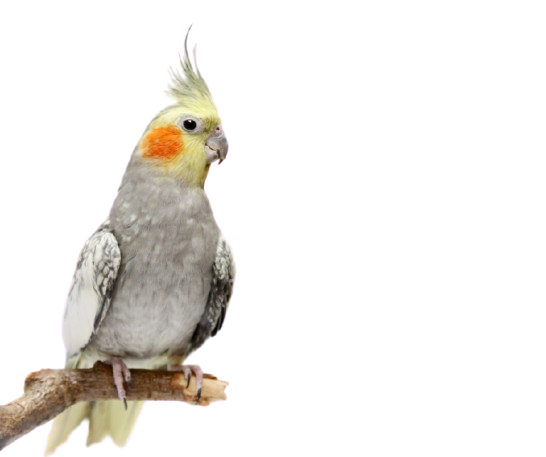
Can cockatiels be trained to do tricks
Can cockatiels be trained to do tricks? Absolutely. Cockatiels are curious, observant birds, and many enjoy learning little behaviors when training feels like a game rather than a struggle. In my experience, the biggest mistake is trying to teach an impressive trick too soon. Start with trust and simple movements, reward the right moment, and let the bird build confidence. Once those pieces are there, tricks such as waving, turning around, targeting, and recall become much easier.
Can Cockatiels Be Trained to Do Tricks Successfully?
Yes, although “successfully” looks different from one cockatiel to another.
I have seen birds become excited as soon as a training session begins, while another bird may stare at the treat, stare at me, and apparently decide it has better things to do. That is normal. Cockatiels have individual personalities, and intelligence does not mean every bird will perform every behavior on command.
Current cockatiel training guidance commonly emphasizes positive reinforcement, immediate rewards, short sessions, and building basic behaviors before moving to more complicated tricks. Target training is particularly useful because it teaches the bird to follow or touch an object without being physically forced.
So, can cockatiels be trained to do tricks? Yes—but patience matters more than trying to make the bird learn quickly.
Start With Trust Before Teaching Cockatiel Tricks
A cockatiel that is frightened of your hands is not ready for an ambitious trick routine.
Before asking for a wave or spin, I would work on calm interaction. Sit near the cage, speak gently, offer a small favorite reward, and allow the bird to approach at its own pace.
The first goal might simply be taking a treat comfortably from your hand. Then you can progress to stepping onto a finger or perch.
This sounds almost too basic, but it is not. A confident step-up behavior makes later training considerably easier and is also useful for everyday handling, cage transfers, travel, and veterinary care.
If your cockatiel backs away, freezes, hisses, or repeatedly tries to escape, slow down. I would rather spend another week building confidence than rush the bird and undo the trust already established.
How to Train a Cockatiel to Do Tricks
The basic training process is quite simple.
Choose a quiet area where your cockatiel is comfortable. Use a tiny reward that the bird genuinely values. Present the behavior in a form the bird can understand, then reward the correct response immediately.
Timing is important. If your cockatiel lifts one foot and you want to teach a wave, reward that movement at the right moment. Eventually, the bird begins connecting the cue with the behavior.
You can use a consistent verbal marker such as “good,” or some trainers use a clicker. The important thing is consistency and immediate reinforcement.
Keep sessions brief. There is no advantage in continuing after your cockatiel has become distracted or frustrated. I often prefer ending with one easy success rather than squeezing in another difficult repetition.
Easy Tricks to Teach a Cockatiel
1. Wave
The wave is one of my favorite beginner tricks because it can develop from a natural foot movement.
Ask the cockatiel to step up, then position your hand so the bird needs to lift one foot without actually stepping onto it. Reward the lifted foot immediately. With repetition, introduce a consistent cue such as “wave.”
Eventually, the bird begins lifting its foot when it hears the cue.
2. Turn Around
A simple spin can be taught by guiding the cockatiel’s head with a small reward or target.
Move the reward slowly in a circle. When the bird follows it and completes the movement, reward it. Later, gradually reduce the lure so the verbal cue becomes more important.
Do not spin the bird physically. The bird should perform the movement voluntarily.
3. Target Touch
Target training is less flashy, perhaps, but extremely useful.
Hold a safe target near the cockatiel. When the bird investigates and touches it with its beak, mark and reward immediately. Once the behavior is understood, gradually move the target farther away.
This can eventually help guide your cockatiel toward a perch, your hand, a carrier, or another location without grabbing it.
4. Recall
Teaching a cockatiel to come toward you when called is both fun and practical.
Begin with a very short distance in a secure indoor room. Call the bird consistently and reward it for moving toward you. As the behavior becomes reliable, gradually increase the distance.
Recall should never be practiced near open doors, windows, ceiling fans, or other hazards. For a flighted bird, the environment needs to be properly secured before you even begin.
5. Whistling on Cue
Some cockatiels seem particularly enthusiastic about whistles. Males are often noted for strong whistling and mimicry abilities, although individual birds vary considerably.
Choose a short, simple sound and repeat it consistently. When your cockatiel attempts to copy it, reward the effort.
One warning from experience: be careful what sounds you repeat. Cockatiels can become surprisingly good at copying household noises. A sound that seems amusing for five minutes may be considerably less amusing every morning afterward.
A Simple Cockatiel Trick Training Routine
If you are starting from scratch, I would keep the routine uncomplicated.
First, establish a reward. Find a small food reward your cockatiel enjoys and reserve it mainly for training.
Next, teach step-up. This gives you a useful foundation for handling and movement.
Then introduce targeting. Reward the bird for touching or following the target.
Choose one trick. Do not teach five new behaviors at the same time. Give the bird a chance to understand one idea.
Reward immediately. Waiting too long can make it unclear which behavior earned the reward.
Stop on a positive note. Even one successful repetition is enough for a young or inexperienced bird.
Several short practices can be more productive than one long session. Recent training guidance commonly recommends brief sessions because maintaining attention and motivation is easier that way.

Common Mistakes When Training Cockatiels
One mistake I see repeatedly is expecting the bird to understand a verbal command before teaching the behavior itself.
Another is using too much pressure. A cockatiel that refuses to wave is not necessarily being stubborn. It may be confused, tired, nervous, or simply not interested at that moment.
Avoid chasing the bird around the cage with your hand. Avoid forcing feet onto your finger. And do not punish biting or fearful behavior. Training based on rewards and voluntary participation generally gives you a much better foundation for future handling.
It is also easy to compare birds unfairly. One cockatiel may learn a turn in a few sessions, while another takes much longer. That does not mean one bird is “smart” and the other is not.
A Breeder’s Guide to Choosing a Trainable Cockatiel
If you are planning to buy a cockatiel specifically because you want a companion you can train, pay attention to temperament rather than choosing solely by color mutation.
A calm, curious bird that is comfortable around people can be a wonderful starting point. Good early socialization can also make everyday training easier, although no responsible breeder should promise that a particular bird will perform a specific trick.
When discussing cockatiels with prospective owners at Buy Cocktiels, I think this is worth explaining clearly: buying a bird is the beginning of the relationship, not the finished training result.
Give the bird time to settle into its new surroundings. Establish a predictable routine. Then begin with simple interactions.
Cockatiel Training Checklist
- Give the bird time to settle.
- Build confidence around your hands.
- Establish a useful reward.
- Teach step-up.
- Introduce target training.
- Pick one simple trick.
- Reward immediately.
- Keep practice sessions short.
- Watch the bird’s body language.
- Increase difficulty gradually.
- Never force a frightened bird.
- Finish training while the bird is still interested.
Conclusion
Can cockatiels be trained to do tricks? Yes, and many can become enthusiastic little performers when training is approached patiently. Waving, turning around, targeting, recall, and simple vocal behaviors are realistic places to begin. The trick itself, though, is not really the most important part.
What I value most is seeing a cockatiel become confident enough to participate willingly. Once that happens, training becomes less like teaching a command and more like having a conversation with your bird. Some days you will make excellent progress. Other days, well, the cockatiel may decide the millet is more interesting than the lesson.
That is part of keeping these birds.
Frequently Asked Question
At what age can cockatiels be trained to do tricks?

A healthy, settled cockatiel can begin learning simple behaviors once it is comfortable in its environment and ready to interact with you. There is no need to rush advanced tricks with a very young bird. Start with trust, calm handling, and simple behaviors, then gradually introduce more challenging tricks as the bird gains confidence and understands how training works.