How do I know if my cockatiel is male or female
How do I know if my cockatiel is male or female is a common question, especially when a young bird has recently joined the family. The answer depends heavily on the cockatiel’s age and color mutation. In normal grey cockatiels, adult feather patterns can provide useful clues after the first adult molt, while some mutations make visual sexing extremely difficult. If you need certainty, DNA sexing is the dependable route. I always tell new owners not to rely on one behavior, one feather, or the old “pelvic bone” trick.
How Do I Know If My Cockatiel Is Male or Female by Appearance?
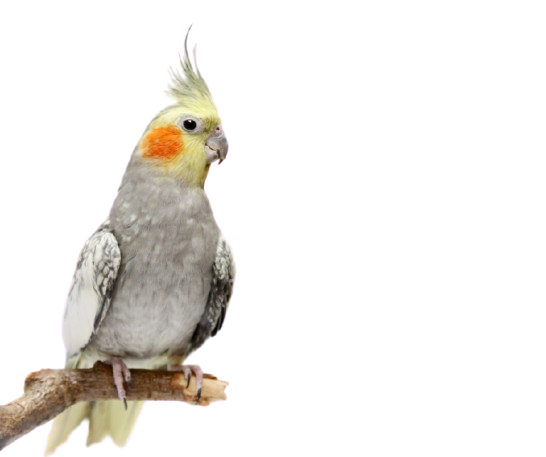
With a mature normal grey cockatiel, the face and underside of the tail and wing feathers can provide useful clues.
A mature male normally develops a stronger yellow face and brighter orange cheek patches. The underside of his long tail feathers and wing feathers becomes more uniform, without the obvious horizontal barring or spotting associated with immature birds and adult females.
A mature female usually retains horizontal yellow barring underneath the tail feathers and yellow spotting underneath the long wing feathers. Her facial coloring is generally less intense than that of an adult male.
These differences become useful only after the bird has developed adult plumage. Veterinary guidance places mature coloring around the first molt, commonly around 9–12 months, although timing can vary between individual birds.
That is why looking at a tiny baby cockatiel and confidently announcing “male” or “female” can be misleading.
Why Young Cockatiels Are Difficult to Sex
Baby cockatiels can make this whole subject confusing.
Before the first adult molt, males and females of many varieties can look remarkably similar. Lafeber notes that young cockatiels generally retain female-type markings until their first adult molt, which may occur roughly between 6 months and a year depending on the bird.
So if you have a three- or four-month-old cockatiel and someone tells you they can determine its sex simply by looking at the face, I would be cautious.
The bird may eventually reveal the answer through adult plumage, but at that age there is often not enough visible evidence.
This is particularly important when buying a young bird. If sex is important to you, ask the breeder whether the bird has actually been DNA sexed rather than accepting a guess based on appearance.
Male vs Female Cockatiel: The Normal Grey Pattern
The normal grey cockatiel is probably the easiest variety for a beginner to understand.
Male Normal Grey Cockatiel
After maturity, a male commonly develops:
- A noticeably brighter yellow face
- Stronger orange cheek patches
- More solid-looking underside of the tail
- Less visible yellow barring on the mature tail
- More uniform long wing feathers underneath
Many males also become enthusiastic whistlers and singers.
I have noticed that owners sometimes fall in love with this difference because the adult male can suddenly look like a completely different bird after his molt. It can be quite a transformation.
Female Normal Grey Cockatiel
A mature female commonly retains:
- Yellow horizontal barring underneath the tail
- Yellow spotting underneath the long wing feathers
- A paler facial appearance
- Less intense cheek coloration
However, remember that these visual clues apply best to mutations where sex-linked plumage differences are actually visible.
They are not a universal cockatiel gender test.
Can Cockatiel Behavior Tell You the Sex?
Behavior can provide clues, but it should never be treated as proof.
Male cockatiels tend to be more vocal and are often better talkers, according to VCA Animal Hospitals.
A male may spend a great deal of time whistling, practicing sounds, tapping objects, lifting his wings into a heart-shaped display, or trying to attract attention.
Females can be quieter, but this is where people sometimes get themselves into trouble. A female can be very vocal. A male can also be relatively quiet.
Personality varies.
I have seen people decide that a friendly cockatiel “must be male,” only to discover later that their confident little bird was female. Temperament is influenced by the individual bird, its upbringing and environment, not simply sex.
So if you are asking, “How do I know if my cockatiel is male or female from behavior?”, the honest answer is that behavior can suggest, but it cannot reliably confirm.

Is Singing a Sign That a Cockatiel Is Male?
It can be a useful clue, especially when a mature cockatiel is singing elaborate songs and practicing whistles.
But singing alone is not enough.
Male cockatiels are generally more inclined toward singing and vocal display, yet individual females can vocalize too. Likewise, a quiet male is still a male.
Think of vocal behavior as one piece of a larger puzzle rather than the answer itself.
If the bird is young, I would put even less weight on behavior because juvenile birds are still developing their adult personalities and vocal habits.
What About Lutino, Pearl, Pied and Whiteface Cockatiels?
This is where cockatiel sexing becomes much more complicated.
Cockatiels come in numerous mutations, including lutino, pearl, pied, cinnamon and whiteface varieties. Some mutations make the traditional male-versus-female feather comparison unreliable.
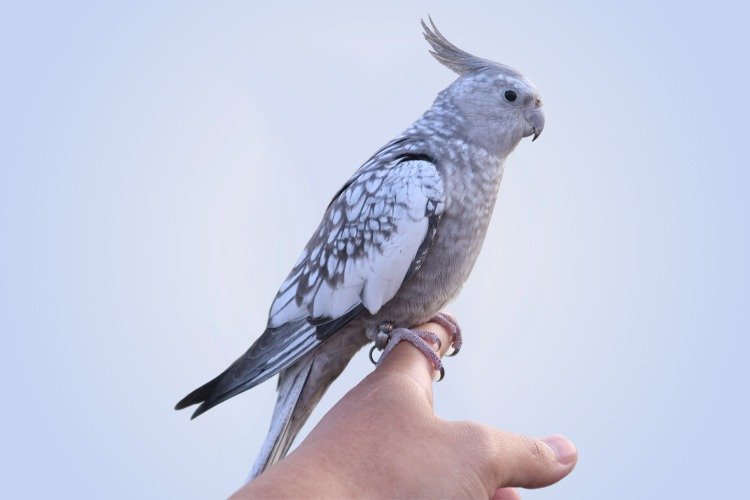
Pearl Cockatiels
Pearling is an especially interesting example.
Young male and female pearl cockatiels can both show the attractive spotted or scalloped feather pattern. As a male matures, he may lose much of that pearling after the adult molt, while a female generally retains it.
This can make the first adult molt very informative.
Still, the genetics of particular combinations can make individual birds more complicated than a simple rule suggests. If you are unsure, ask someone experienced with cockatiel mutations rather than guessing.
Lutino Cockatiels
Lutinos can be considerably harder to visually sex.
The usual grey-cockatiel facial and tail markings are not available in the same obvious way, so behavior or genetic information may become more important.
Pied Cockatiels
Pied birds can also complicate visual sexing because the distribution of light and dark feathers varies.
Looking at one patch of feathers is not enough.
Whiteface and Other Light Mutations
Whiteface and other mutations can remove some of the visual characteristics people normally use to distinguish males and females.
Recent Lafeber guidance specifically notes that several lighter cockatiel mutations can be difficult to sex visually and that DNA testing may be the reliable solution.
Can You Tell a Cockatiel’s Sex From Its Pelvic Bones?
No reliable conclusion can be made from the width of a cockatiel’s pelvic bones.
This is an old method that continues to circulate among bird owners, but it is not a dependable way to determine sex. Lafeber specifically describes pelvic spacing as an unreliable method, noting that males can have a wider gap and females can have a narrow one.
I would not recommend pressing around a bird’s pelvis just to try to identify its sex.
Apart from being unreliable, unnecessary handling can stress a nervous bird.
There are much better ways to answer the question.
How Accurate Is DNA Sexing for Cockatiels?
If you genuinely need to know whether your cockatiel is male or female, DNA sexing is the practical option.
A DNA test can be arranged through an avian veterinarian or an appropriate bird-testing service. Lafeber identifies DNA testing as the way to establish sex when visual characteristics cannot provide a dependable answer.
This can be particularly useful when:
- Your cockatiel is a mutation that cannot be visually sexed.
- You are planning responsible future breeding.
- You have two birds and need to understand their sexes.
- You want to avoid assumptions about gender.
- You are purchasing a bird advertised as a particular sex.
If a seller says a young bird is “definitely male” but there is no DNA result and the bird has not reached mature plumage, I would treat that statement as a prediction rather than a confirmed fact.
How Age Changes Cockatiel Sex Identification
Age matters enormously.
A baby cockatiel may look female even when it will eventually develop male adult markings. This is one reason inexperienced owners can become confused after the first molt.
As the bird matures, the feathers can change enough to make the answer much clearer in mutations that permit visual sexing.
For a normal grey bird, the first adult molt is particularly useful. For some other mutations, however, you may never get an obvious visual distinction.
Lafeber also notes that by around two years, birds generally have developed their adult appearance, although some mutations remain visually identical between sexes.
A Simple User Guide: Checking Your Cockatiel’s Sex
If you are trying to work this out at home, I would use this order rather than jumping straight to a conclusion.
1. Identify the Mutation
First determine whether your bird is normal grey, pearl, lutino, pied, cinnamon, whiteface or another mutation.
This matters because the sexing clues are not identical.
2. Estimate the Age
A young bird may simply be too immature to sex visually.
If your cockatiel has not experienced its first adult molt, be careful about making a confident visual judgment.
3. Examine the Adult Plumage
If it is a mature normal grey, inspect the face, tail and long wing feathers.
Look for patterns rather than one isolated feather.
4. Observe Vocal Behavior
Does the bird regularly whistle, sing and practice sounds?
That may lean toward male behavior, but it is not proof.
5. Do Not Use Pelvic Width
It is not a reliable sexing method.
6. Use DNA Testing When Certainty Matters
When the mutation is difficult to sex or you simply need a definite answer, DNA testing is the sensible choice.
Choosing a Cockatiel When Sex Matters to You
If you are looking to purchase a cockatiel, tell the breeder that sex matters before choosing the bird.
This is something I think buyers should discuss early, not after the bird has already been selected.
Ask whether the sex is:
- Visually determined from mature plumage
- Based on parental genetics
- Estimated from behavior
- Confirmed by DNA testing
Those are very different levels of certainty.
At Buy Cocktiels, the goal should be to give a prospective owner enough information to understand what they are actually taking home. A beautiful bird is wonderful, but knowing its age, mutation, socialization history and confirmed sex—when applicable—makes the buying decision much easier.
And if the sex is not confirmed, it is better to say so honestly.
Top Cockatiel Breeder Questions to Ask Before Buying
If you are comparing breeders or sellers, I would keep a practical checklist in mind:
- What is the cockatiel’s hatch date?
- What mutation is the bird?
- Is the bird fully weaned?
- What food is it eating?
- Has it been hand-raised or parent-raised?
- How much human handling has it received?
- Has the sex been DNA tested?
- If not, how was the seller’s sex estimate made?
- Has the bird received veterinary attention?
- Are there records available?
- What is the bird’s normal personality?
- Has it lived around other cockatiels?
- What care routine is it accustomed to?
- What happens if the buyer discovers the bird is not the sex expected?
- Can the breeder explain the mutation rather than simply giving it a sales name?
These questions are useful because they shift the conversation away from appearance alone.
Does Male or Female Make a Better Pet?
There is no universal winner.
If you want a particularly vocal companion, you may prefer the tendencies commonly associated with males. VCA notes that males tend to be better talkers.
But that does not mean every male will become a little singer, and it certainly does not mean females make inferior companions.
A gentle female can be an absolutely wonderful pet.
For me, the better question is whether the bird is healthy, well-socialized and compatible with the owner’s lifestyle.
A cockatiel’s individual personality can matter far more than the label on its sex.
Breeding Considerations for Male and Female Cockatiels
Sex becomes particularly important if you are considering breeding.
Two birds that appear compatible are not automatically a suitable breeding pair. Age, health, genetics, relatedness, nutrition and housing all matter.
This is one reason I would not encourage owners to pair young cockatiels simply because they believe they have identified a male and female.
Cockatiels can reach sexual maturity relatively young, but responsible breeding requires more than sexual maturity. If breeding is your goal, work with an avian veterinarian and an experienced breeder who understands cockatiel genetics and reproductive management.
For a pet owner, there is usually no need to rush into breeding simply because you have one male and one female.
What If My Cockatiel’s Sex Still Isn’t Clear?
That is completely fine.
Sometimes the honest answer is simply, “I don’t know yet.”
If the bird is young, wait for mature plumage where appropriate. If the mutation makes visual identification unreliable, use DNA testing. If behavior suggests one sex but the appearance suggests another, do not force the evidence to fit your original assumption.
This is especially important when purchasing a cockatiel.
A good breeder should be comfortable explaining what is known and what is only an estimate.

Conclusion: How Do I Know If My Cockatiel Is Male or Female?
How do I know if my cockatiel is male or female? Start with the bird’s age and mutation, then look at mature feather patterns when the variety allows visual sexing. Normal grey adult cockatiels often provide the clearest clues through facial color and tail and wing markings.
Behavior can add another clue because males often sing and whistle more, but it should never be treated as a guaranteed gender test. Some mutations are simply too difficult to distinguish visually. In those cases, DNA sexing is the better answer.
Most importantly, do not rely on pelvic-bone width or one isolated behavior. When buying a cockatiel from Buy Cocktiels, ask questions, understand the bird’s age and mutation, and find out whether the stated sex is actually confirmed.
That little bit of caution at the beginning can save a surprising amount of confusion later.
Frequently Asked Question
Can I tell if my cockatiel is male or female just by looking at it?

Sometimes. A mature normal grey cockatiel can often be visually sexed from its adult facial and feather markings, but young birds and several color mutations can be much harder to identify. When appearance does not provide a dependable answer, DNA sexing is the safest way to confirm the bird’s sex.