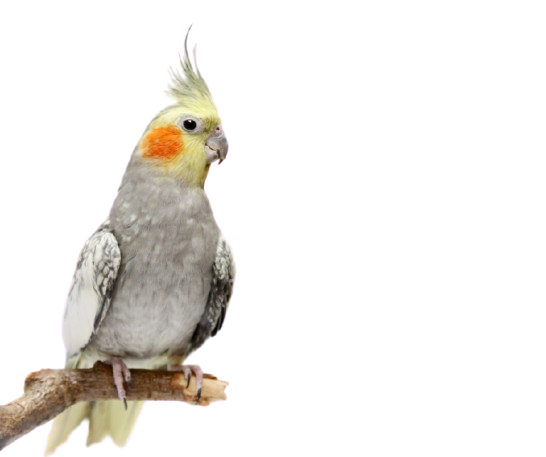
How large should a cockatiel cage be
How large should a cockatiel cage be? For one cockatiel, I recommend choosing the largest practical cage you can afford and safely fit into your home, with enough room for the bird to stretch, climb, play, and move between perches without constantly touching the bars. Cage size matters, but so does the layout inside it. A roomy cage with poor perch placement can be less useful than a slightly smaller cage arranged thoughtfully. After keeping cockatiels, I have learned that giving them genuine movement space makes daily care easier and usually makes the birds happier too.
How large should a cockatiel cage be?
The honest answer is: as large as you can reasonably provide while maintaining safe bar spacing, construction, accessibility, and usable interior space.
You will find different minimum cage recommendations online, and that can be confusing for new owners. Rather than becoming obsessed with one particular number, I think it is better to understand what the measurement needs to accomplish.
A cockatiel should have enough room to stand comfortably, turn around, climb, stretch its wings, and move between perches without repeatedly bumping into toys or cage walls.
For a single cockatiel, many avian-care sources recommend a cage around 20–24 inches wide as a minimum starting point, with larger being preferable whenever possible. VCA’s cockatiel care guidance recommends a cage measuring at least 24 inches wide by 24 inches long by 30 inches high, while noting that larger is better.
I would not interpret that as a target to stop at.
If you have room for a wider cage, take advantage of it.
Why cage width matters for cockatiels
People often look at height first because a tall cage appears impressive.
Cockatiels, however, are not simply birds that need a tall vertical box.
They are active parrots with long tails and a strong need for movement. A cage that is tall but very narrow can leave surprisingly little useful space.
When I compare cages, I pay close attention to width and depth. A bird needs room to move horizontally, especially when several perches are arranged at different positions.
Imagine putting a few perches across a narrow tower. The bird can climb upward, but it cannot move very far from side to side.
Now imagine a wider enclosure.
Suddenly you can create different areas: a feeding station, resting perch, toy area, climbing space, and an open section where the bird can stretch its wings.
That is much more practical.
How large should a cockatiel cage be for one bird?
For one cockatiel, I would look for a cage that is at least around 24 inches wide, 24 inches deep, and 30 inches high, while treating those measurements as a practical minimum rather than an ideal maximum.
A larger cage is usually preferable if your room and budget allow it.
The most important thing is usable space.
A 30-inch-wide cage packed with large toys, multiple bowls, ladders, and thick decorations may leave less free movement than you expected. When buying a cage, think about the dimensions after you furnish it.
Your cockatiel should still have clear areas where it can move without constantly brushing against something.
And remember the tail.
Cockatiels have relatively long tails compared with many other small companion birds. You do not want the tail dragging against cage furnishings every time the bird moves.
How large should a cockatiel cage be for two cockatiels?
Two cockatiels need more than a single-bird cage with an extra perch added.
If you plan to house two birds together, increase the cage dimensions substantially and make sure both birds can move away from each other when they want to.
This is important because even birds that normally get along need personal space.
One may want to eat while the other wants to play. One may want to rest while the other is climbing around.
A spacious cage gives them options.
I also recommend thinking about the cage’s door size, feeding access, cleaning convenience, and placement of perches. A cage can look enormous from the outside while still being awkward internally.
If two cockatiels will share an enclosure, introduce them carefully and monitor their behavior. Never assume that two birds will automatically become compatible simply because they are both cockatiels.
What is the best cage shape for a cockatiel?
For most cockatiels, I prefer a cage that provides plenty of horizontal space rather than a very narrow, decorative tower.
Rectangular cages are usually straightforward to arrange.
They also make it easier to position perches at different heights while leaving a clear central area.
Be cautious with overly elaborate cages that have unusual curves, decorative gaps, or complicated internal sections. They may look attractive in a showroom, but bird safety should come first.
The best cockatiel cage is not necessarily the fanciest cage.
It is the one that gives your bird useful movement space, appropriate bar spacing, safe construction, good ventilation, and easy access for cleaning.
Cockatiel cage bar spacing is just as important as size
A huge cage with unsafe bar spacing is not a good cage.
For cockatiels, bar spacing around 1/2 inch to 5/8 inch is commonly recommended, with the exact suitability depending on the individual bird and cage design. VCA lists 1/2 to 5/8 inch bar spacing for cockatiel cages.
This is one area where I would not improvise.
If the gaps are too wide, a cockatiel may be able to put its head through the bars. That can create a serious injury risk.
If you are purchasing a cage online, check the manufacturer’s stated bar spacing rather than judging from photographs.
Pictures can be misleading.
Two cages may look almost identical on a computer screen while having completely different bar spacing.
Why a large cage can still be too small inside
This is something new owners often discover after purchasing a cage.
They buy a large enclosure, then fill it.
One swing goes here. A ladder goes there. Several toys hang from the roof. Three food bowls occupy another section. A mineral block takes up space. Then a few more toys arrive because the bird enjoys them.
Suddenly the cockatiel has a cage that is technically large but practically crowded.
I have done this myself with bird setups. You see an empty cage and think, “It needs more enrichment.” Then you realize the bird needs some empty space too.
Leave room for movement.
Rotate toys instead of putting every toy inside at once. That gives you the additional benefit of changing the environment occasionally without turning the cage into a storage cupboard.
Choosing perches for a large cockatiel cage
Perches are not just furniture.
They affect how the cockatiel moves around the cage and how its feet experience pressure.
I prefer several perches with different diameters and textures rather than a cage filled with identical smooth dowels.
Natural branches can be useful when properly prepared and confirmed safe for birds. VCA recommends providing natural wood perches of different diameters and notes that the perch should not be too small or too large for the bird’s feet.
Position the perches so the bird can move between them comfortably.
Do not place every perch directly above another perch.
Otherwise, droppings can fall onto lower perches, food dishes, toys, or the bird itself.
That sounds like a minor detail.
It is not.
Good cage arrangement reduces cleaning problems and helps keep the bird’s living space more hygienic.
Where should food and water go?
Food and water should be positioned so they are easy for the cockatiel to access but protected as much as practical from droppings and debris.
I like to observe the bird for a few days after changing the cage arrangement.
Does it use the water bowl comfortably?
Can it reach its food without awkward climbing?
Does a favorite perch sit directly above the food?
If so, move something.
A cage should work for the bird rather than simply looking organized to the human standing outside it.
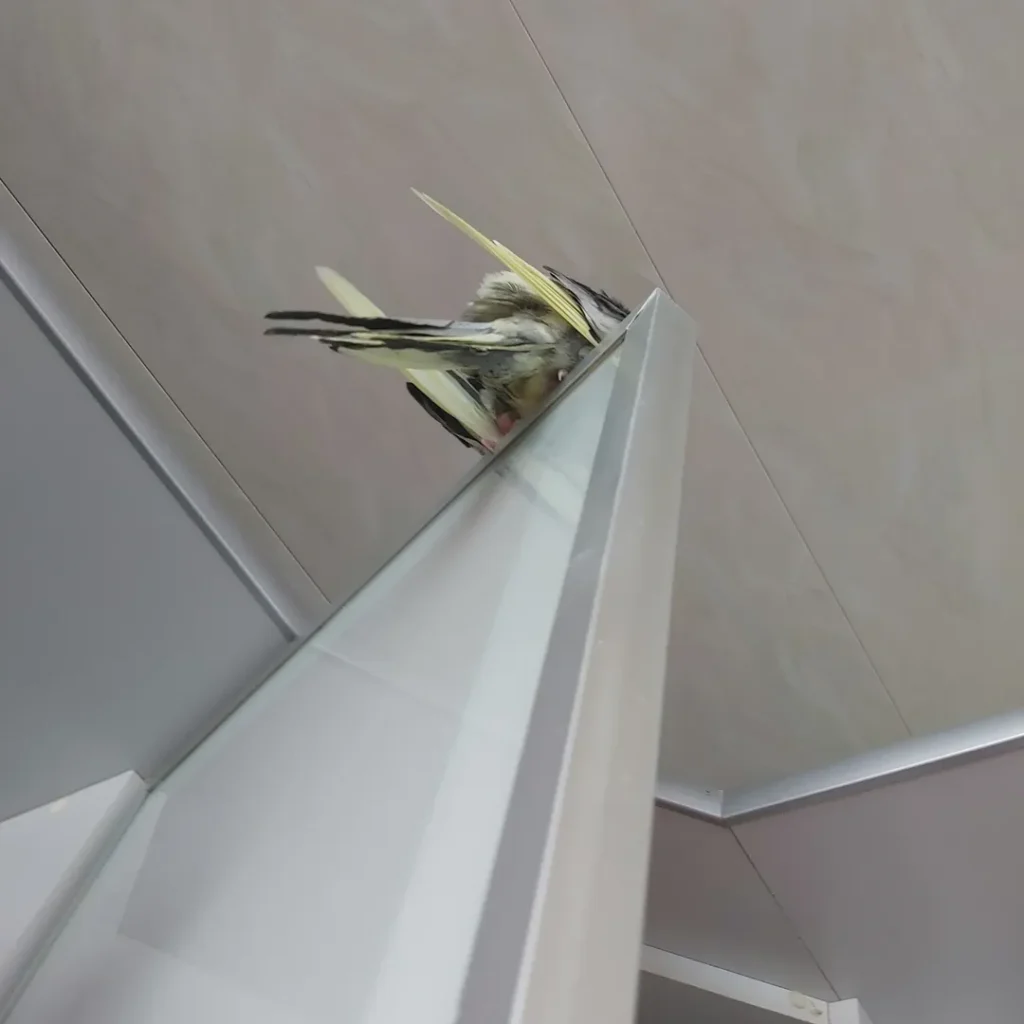
How much room does a cockatiel need to stretch its wings?
This is one of the simplest tests.
Your cockatiel should have enough open space to extend and flap its wings without immediately hitting a toy, perch, bowl, or cage wall.
That does not mean the cage must be large enough for sustained flight.
A cage is still an enclosure.
Cockatiels should have opportunities for supervised exercise and movement outside the cage when the environment is safe. VCA notes that pet birds need regular out-of-cage exercise and interaction, with the home made bird-safe before the bird is allowed to fly freely.
So think of the cage as the bird’s secure base.
It is where the cockatiel sleeps, eats, rests, plays, and spends time when you cannot supervise it.
It should not be the only place where the bird gets to move.
Cockatiel cage height: does taller always mean better?
Not necessarily.
Height is useful, but I would prioritize a balanced cage with generous width and depth over an extremely tall, narrow enclosure.
Cockatiels naturally climb and enjoy higher resting positions, so providing elevated perches is worthwhile.
However, a cage that is 50 inches tall but only 16 inches wide may not provide the movement space you imagine.
A wider cage can be much more useful.
If you have a choice between adding another foot of height or adding meaningful width and depth, I would usually look carefully at the wider option.
Cage placement matters too
You can buy an excellent cage and put it in a poor location.
Avoid placing the cage where the bird is constantly exposed to drafts, extreme temperatures, kitchen fumes, smoke, or other environmental hazards.
The kitchen deserves particular caution because birds are highly sensitive to airborne contaminants. Nonstick cookware and other household fumes can pose serious risks to birds, and VCA specifically warns about kitchen hazards and fumes.
I like a location where the cockatiel can see and participate in normal household activity without being placed in the middle of chaos.
A corner can provide security.
But a completely isolated room can reduce social interaction.
There is a middle ground.
Give your cockatiel a secure sleeping area
Cockatiels need adequate rest.
The cage should be placed somewhere where the bird can get a consistent period of quiet and darkness at night. Household activity can be surprisingly disruptive for a small parrot.
If your living room remains bright and noisy late into the night, consider how you will provide a suitable sleeping routine.
Some owners use a separate sleep cage; others manage the main cage environment differently.
There is no single setup that works for every household.
The important part is consistency.
A tired cockatiel can become more irritable, less active, or harder to handle.
How large should a cockatiel cage be for a young bird?
A young cockatiel still needs adequate space.
Do not buy a tiny “starter cage” simply because the bird is small.
Young birds grow, develop coordination, climb, and explore quickly. A cage that seems acceptable for a newly weaned cockatiel may become restrictive sooner than you expect.
If your budget permits, I would rather purchase a properly sized adult cage from the beginning.
That saves money and prevents the bird from having to adjust to several different cages unnecessarily.
How large should a cockatiel cage be if the bird gets daily free flight?
Daily out-of-cage time is excellent, but it does not make cage size irrelevant.
Your cockatiel still spends many hours inside the enclosure.
Think about overnight hours, times when you are away, meal periods, quiet periods, and situations where the bird needs to remain safely contained.
The cage should therefore be comfortable even when the bird is not flying around the house.
Free flight and a good cage complement one another.
One does not replace the other.
A practical guide to setting up a cockatiel cage
Here is how I would approach a new cage.
1. Start with open floor space
Do not immediately cover every part of the cage with accessories.
Leave room.
2. Add the main resting perch
Place it high enough for the cockatiel to feel secure but not so close to the ceiling that the bird cannot sit naturally.
3. Add additional perches
Use different safe diameters and place them at different positions.
4. Add food and water
Keep them accessible and away from likely droppings.
5. Add enrichment gradually
A few suitable toys are better than a cage packed beyond recognition.
6. Watch the bird
This is the step people skip.
Observe where your cockatiel actually likes to sit and move.
7. Adjust the layout
If the bird consistently ignores a perch or struggles to reach something, change it.
There is nothing sacred about your original arrangement.
Top things to look for when buying a cockatiel cage
If you are comparing several cages, I would create a shortlist based on practical features rather than appearance.
1. Generous width
More horizontal room generally gives a cockatiel more useful movement space.
2. Appropriate depth
The bird needs enough front-to-back room for its tail and body.
3. Safe bar spacing
For cockatiels, check that the spacing is appropriate rather than assuming every small-parrot cage is safe.
4. Strong construction
The cage should be stable and resistant to damage from normal parrot activity.
5. Easy cleaning
Removable trays and accessible surfaces make regular maintenance much easier.
6. Secure doors
A cockatiel is small but surprisingly clever. Doors should close securely.
7. Large access doors
You need to be able to reach the interior comfortably for cleaning and rearranging.
8. Safe finishes
Choose cages manufactured for companion birds and avoid questionable coatings or materials.
9. Suitable feeding access
Food and water should be easy to replace without creating unnecessary escape opportunities.
10. Mobility when appropriate
Wheels can be convenient on larger cages, provided the cage remains stable and secure.
11. Enough room for enrichment
Toys should fit without eliminating the bird’s usable movement area.
12. Room for future adjustments
Your cockatiel’s preferences may change.
A cage that can be rearranged is useful.
Common mistakes when choosing a cockatiel cage
I have seen several mistakes repeated by new bird owners.
The first is choosing based entirely on price.
A cheaper cage that must be replaced quickly is not always cheaper in the long run.
The second is choosing based on height alone.
The third is ignoring bar spacing.
The fourth is purchasing a cage that looks beautiful but is difficult to clean.
The fifth is filling every available section with toys.
And the sixth is forgetting that the cage must fit the bird’s tail, not just its body.
These details sound small when you read them individually.
Together, they make a big difference.
Should you buy the biggest cockatiel cage possible?
Generally, more safe space is beneficial.
But “biggest possible” needs a little common sense.
The cage must fit through your doors, fit into the intended room, remain stable, and allow you to clean it properly.
A gigantic cage that blocks half the room and cannot be maintained properly is not automatically better.
You also need to consider the bird’s access to daily social interaction and exercise.
So my preferred rule is simple:
Buy the largest safe, practical cage you can comfortably maintain.
That is a better goal than chasing a particular dimension simply because someone online says it is the perfect size.
Buying a cockatiel and preparing the cage together
If you are planning to purchase a cockatiel, prepare the enclosure before bringing the bird home.
At Buy Cocktiels, I would encourage new owners to think about the cage as part of the bird’s overall care rather than an accessory purchased afterward.
The cage, diet, perches, enrichment, sleep routine, veterinary care, and daily interaction all work together.
A beautiful cockatiel deserves a suitable environment.
And honestly, watching a cockatiel explore a properly arranged spacious cage is one of those simple things that never gets old.
Conclusion
How large should a cockatiel cage be? For one cockatiel, a cage around 24 inches wide, 24 inches deep, and 30 inches high is a useful minimum reference point, but I would choose larger whenever your space and budget allow. The important thing is not simply the outside measurement. Your cockatiel needs usable room to move, stretch its wings, climb, rest, and interact with enrichment without the cage becoming overcrowded.
Pay close attention to bar spacing, safe construction, perch placement, cleaning access, and cage location. For two cockatiels, provide substantially more space and make sure both birds can move away from each other when necessary.
Most importantly, remember that a cage is your cockatiel’s safe home base, not its entire world. A good enclosure combined with appropriate exercise, social interaction, enrichment, nutrition, and veterinary care gives your bird a much stronger foundation for a healthy life.
Frequently Asked Question
How large should a cockatiel cage be for one cockatiel?

A practical minimum starting point is around 24 inches wide, 24 inches deep, and 30 inches high, with larger being preferable when possible. Make sure the cage has appropriate bar spacing, enough open movement space, suitable perches, and room for enrichment without becoming overcrowded. A larger cage is particularly valuable when the cockatiel will spend substantial time inside it, although supervised exercise outside the cage should still be part of its routine.